
Why Every Optometrist Should Add a Non-Clinical Role

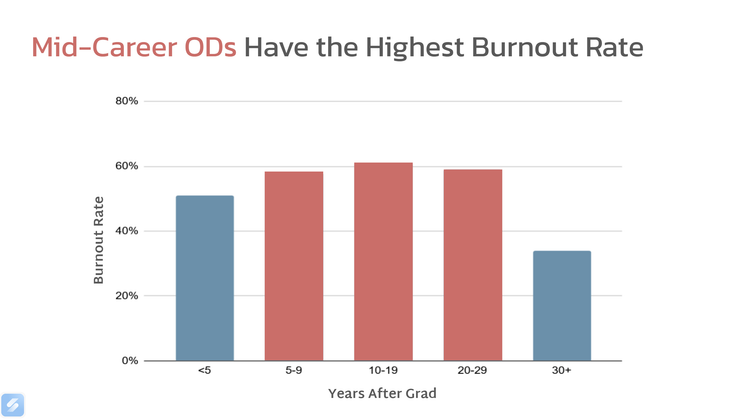
One of the biggest—yet least discussed—drivers of burnout in optometry is clinical repetition.
Optometry is an amazing profession, but it is repetitive. Same tests, same conversations, day after day.
The Real Problem Isn’t You — It’s the System
Modern healthcare is moving towards:
- High volume
- Fast pace
- Repetitive workflows
- Increasing administrative load (endless charting, letters, reports...)
That structure is efficient, but it comes at a cost.
Over time, it drains the very passion that drew many of us into healthcare in the first place. The curiosity. The creativity. The sense of growth.
And when growth stalls, burnout follows.
So what’s the solution?
Non-Clinical Role: Where YOU Make the Rules
Clinical work is necessarily standardized and regulated. That structure protects patients—but it doesn’t leave much room for exploration or creativity.
Non-clinical work is different.
This is where you get to make the rules.
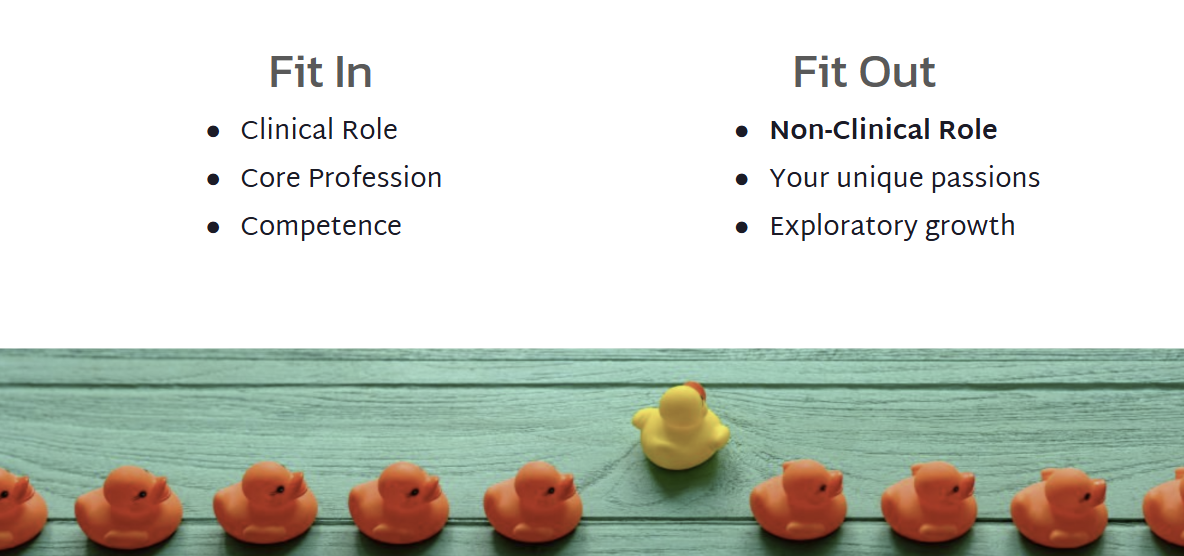
By the time you hit mid-career, you’ve built something incredibly valuable:
deep clinical competence.
That competence—earned through thousands of eye exams—matters. It always will.
Now that you've mastered "fitting in" as a competent optometrist, now it's time to FIT OUT!
One Powerful Way to Fit Out: Non-Clinical Roles
As doctors, our skills translate far beyond the exam room.
There is a huge variety of non-clinical roles available to optometrists:
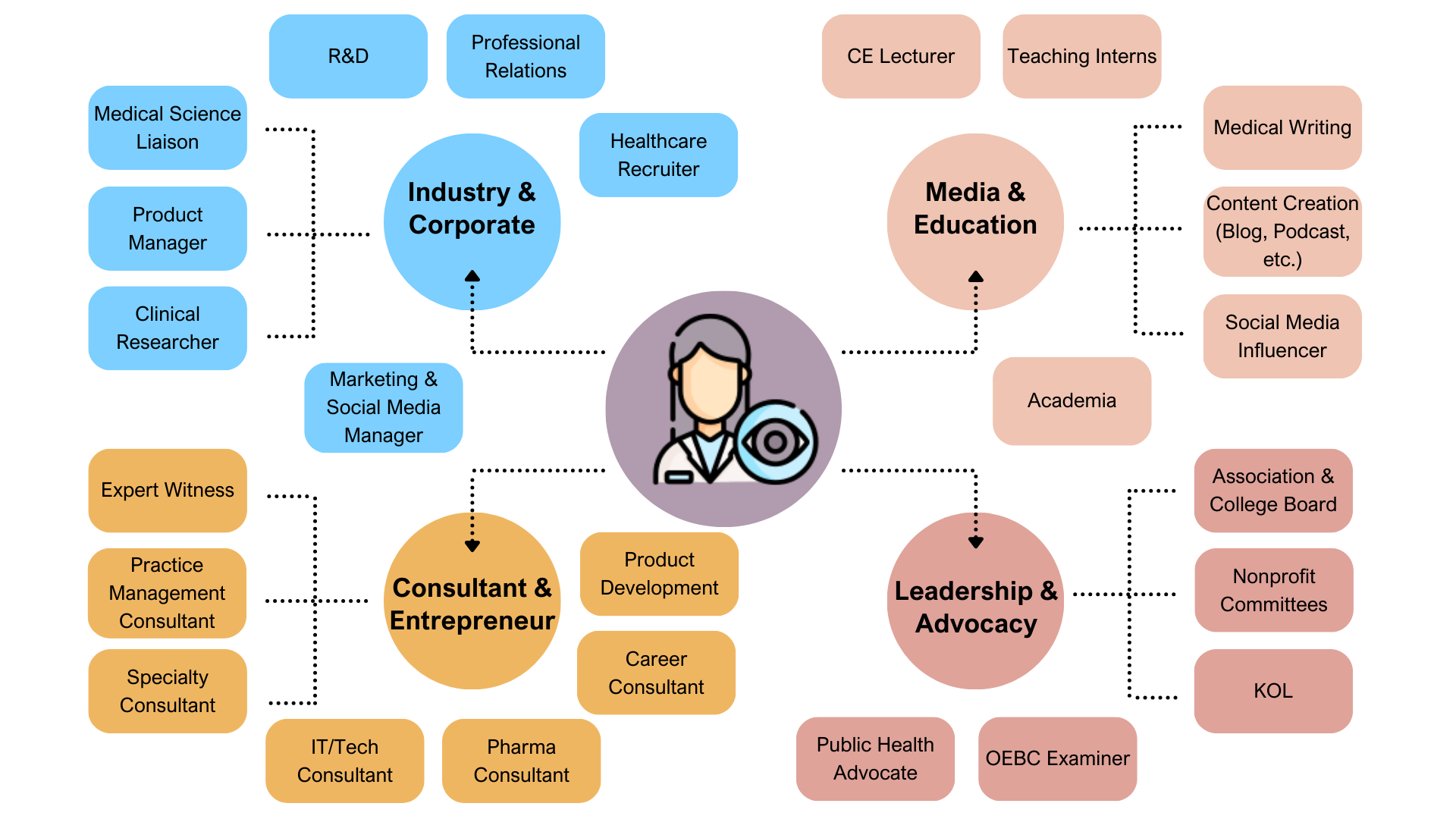
These roles allow you to tackle new intellectual problems and tap into creativity. Honing new skills, not to win, but to play and grow.
Does This Mean Leaving Clinical Work Entirely?
No.
And this is a critical point.
We are clinicians first. Clinical work is meaningful, impactful, and foundational.
What has worked—for me and for many colleagues—is something different:
The Portfolio Career
Think of it like a diversified investment portfolio, but for your career.
A portfolio career is a blend of multiple roles.
For example: Clinical optometrist, 3 days/week, Medical writer on Thursdays, and Industry consultant on Fridays
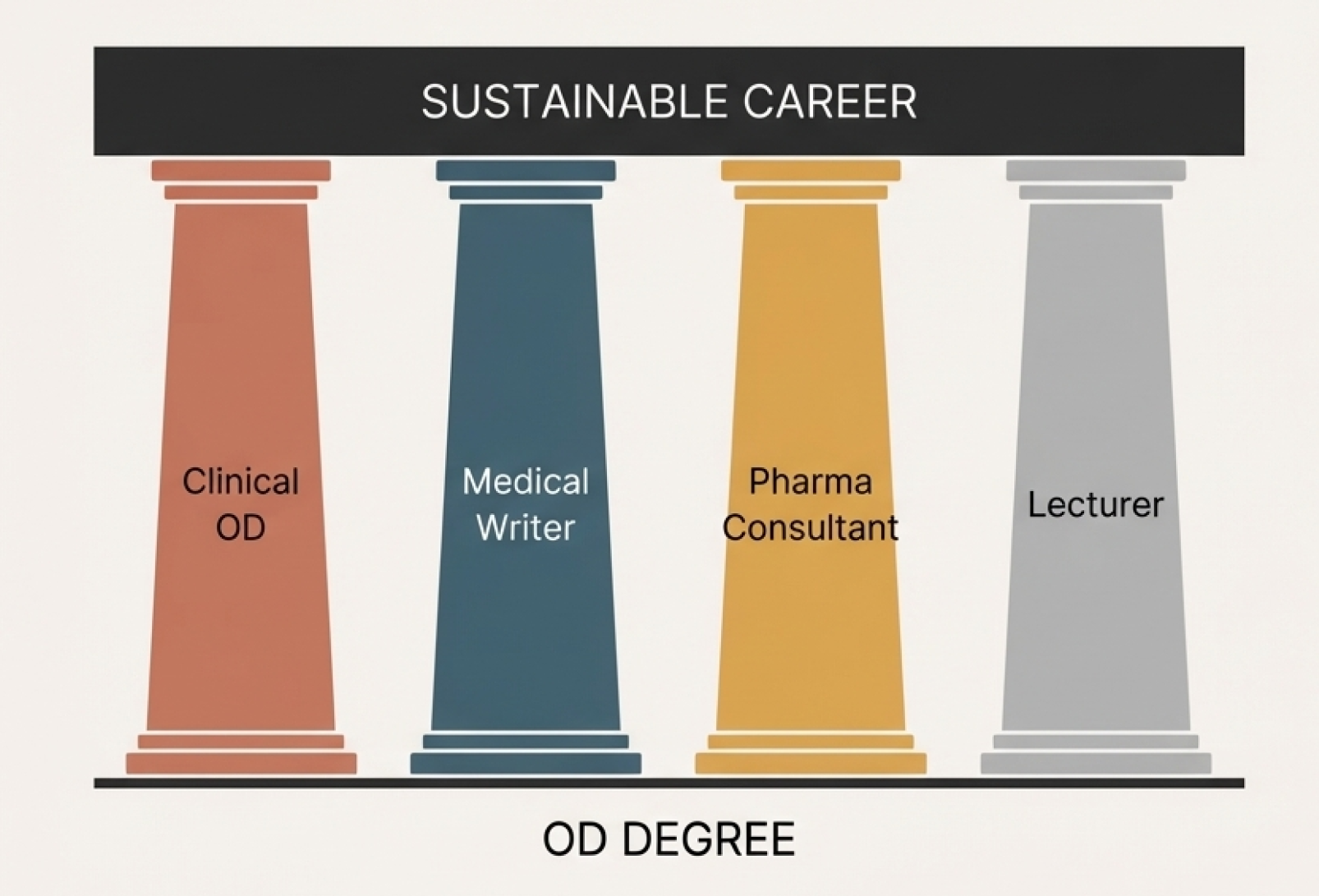
Each role becomes a pillar.
When one pillar is stressed (a heavy clinical week), others provide balance.
When one excites you creatively, it fuels the rest.
The solution to clinical repetition is not leaving the profession.
It’s blending clinical and non-clinical roles into a career uniquely aligned with your passions.
Why Portfolio Careers Work
1. Burnout prevention
Doctors with portfolio careers often enjoy longer, more sustainable careers.
2. Financial stability
Clinical work provides stability, so your non-clinical doesn't have to. You can explore without pressure.
3. Impact beyond the exam room
Whether it’s shaping the profession, educating others, or influencing systems—you expand your reach.
4. Synergy
Many doctors find they become better, happier clinicians thanks to the synergy between clinical and non-clinical roles.
5. Autonomy & flexibility
Many non-clinical roles offer control over schedule and direction. You make the rules.
My Own Turning Point
After experiencing burnout, I switched to freelance optometry with one goal:
“Work less and live more.”
But something unexpected happened.
As I added non-clinical roles—writing, speaking, consulting, I built a career that feels uniquely "me", and I found more work happiness than I ever imagined possible.
There are nights I can't sleep because I'm so excited to work the next day, whether that's clinical work (travel optometry) or non-clinical roles like writing. It sounds over the top, but it's true!
So How Do You Get Started?
Starting a non-clinical path is shockingly simple.
There's no checklist, advanced degrees, nor a five-year plan.
It’s just one step:
Put yourself out there.
That’s it.
That single action opens doors to conversations, collaborations, and opportunities you can’t yet see.
Every non-clinical path begins this way.
In a follow-up article, I’ll break down practical ways to “put yourself out there."




Member discussion