
The Flip Side of Caring
Recently, an optometry colleague said this:
"I love connecting with people. I don't understand why I feel this drained after work."
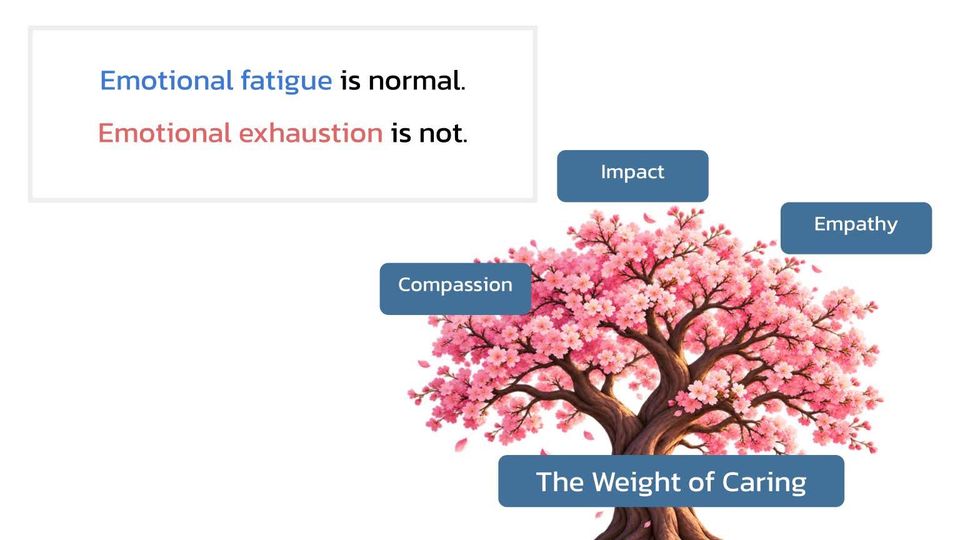
It's a sentiment most healthcare workers can relate to different degrees. Emotional fatigue is real in healthcare. And maybe that's not such a bad thing.
The Flip Side of Caring
How can we care for our patients, and not feel drained sometimes?
How can we be compassionate and not feel compassionate fatigue sometimes?
All the wonderful things we enjoy as healthcare workers like impact and connection can't exist without the occasional emotional fatigue. In many ways, I think an emotional fatigue is the flip side of caring.
On the last day of my recent travel clinic, I saw a patient with retinal detachment which needed a prompt surgery. It was stressful juggling a full day of patients, checking-in for my flight home the next day, but also trying to coordinate with the on-call ophthalmologist to get my patient an appointment.
Thankfully, Dr. Best (he's the best!!) was kind enough to see the patient that day.
After clinic, I sank into a chair at a restaurant, and took a very... very long drink of iceberg beer.
My first thought: "Wow, I'm so tired."
My second thought: "I made a difference today. I did good work."
Some work days drain me more than others. But it's these particularly tough days that are often the most rewarding. Emotional fatigue is a price I'd gladly pay to have the kind of impact we have as ECPs.
Fatigue is Normal. Exhaustion is Not.
Emotional fatigue is normal; emotional exhaustion is not.
Tough workweek is normal; feeling drained for months is not.
The goal is to manage our well-being to avoid emotional exhaustion:
1) Processing difficult experiences with peer support improves compassion fatigue.
Research with nurses showed that peer-support groups improves compassion fatigue.
This is particularly relevant for optometrists because we are prone to professional isolation. Most of us don't work in big organizations like hospitals. In addition, many of us are in a solo or rural practice.
Whether it's conferences, industry dinners, or a coffee check-in, connecting with colleagues is one of the most powerful ways to manage emotional fatigue.
2) Holistic well-being
When one pillar of well-being is stressed (like a tough workweek), other well-being pillars like good relationships, health, and having fun can provide resilience against workplace burnout.
Self-care is especially important for busy professionals because our own health is one of the first things to be compromised when life gets busy.
There's a mounting evidence that professionals who feel overwhelmed by the constant demands of work and life are more likely to have:
- mental health conditions like anxiety and depression
- unhealthy lifestyle habits (i.e. eating junk food, poor sleep)
- family conflicts, and much more.
The one advice I give to all busy professionals is to slow down their work. Whether it's leaving an hour earlier on Fridays or temporarily stepping away from work (sabbatical anyone??), slowing down creates the time and energy needed to reinvest into our holistic well-being.
Recognize when fatigue is becoming exhaustion.
Ultimately, we can't eliminate the emotional demands of healthcare, nor should we want to. They're often a reflection of how much we care.
But we can learn to recognize when fatigue is becoming exhaustion, and take steps to protect ourselves so that we can continue caring for others.





Member discussion