From Clinic to Campus: How Slowing Down Transformed One OD's Career Path
You graduate, get the job, and put in the work. You charge full steam ahead.
And then something stops you.
For Dr. Deborah Wang, it was a phone call from her dad.
The Call That Changed Everything
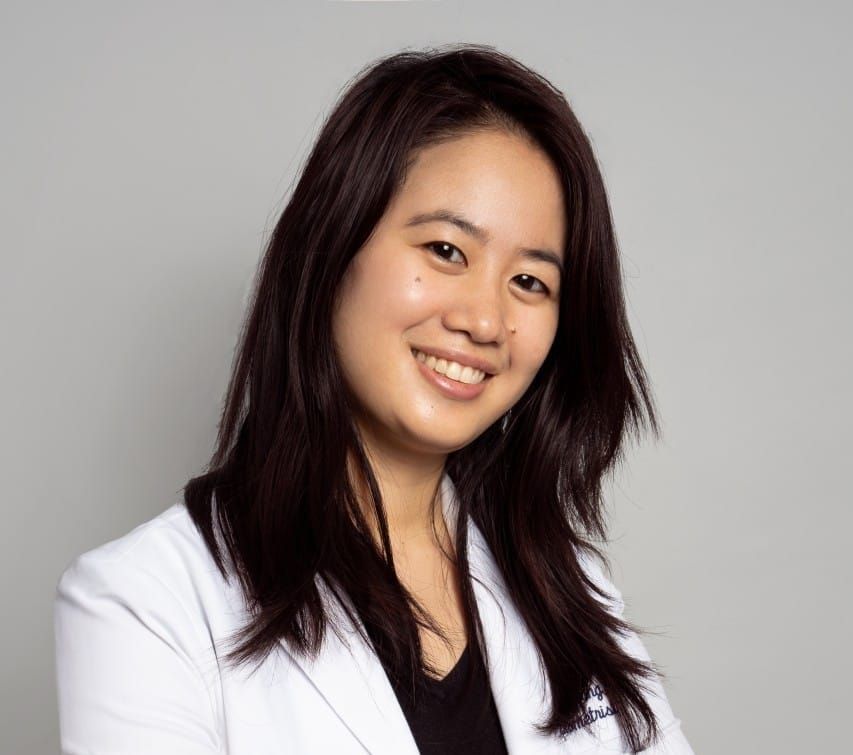
Deborah graduated from SUNY Optometry in 2020 and hit the ground running. She was the first doctor to be hired at a busy ophthalmology practice in Brooklyn, seeing up to 40 patients a day.
By any measure, she was thriving. The work was hard and the cases were complex. But she was growing, helping people, and contributing in a meaningful way.
Then in 2022, her dad called. Her mom had been diagnosed with terminal cancer.
"My family is the most important thing to me," she told her boss the same day. "I want to be able to travel home as much as I can."
Her boss said yes without hesitation. And so began a chapter that would quietly reshape everything.
Deborah flew home every few months. She took her mom to visit her future in-laws. And in 2023, when her mom chose to stop treatment, Deborah quit her job, moved back to Chicago, and spent their last days together.
She reflects on how difficult it was to be a full-time caretaker–but also that it was one of the most meaningful things she's ever done.
When she returned to New York, she knew one thing: she wasn't ready to see patients. She needed something different. So she reached out to the Director of Career Development at SUNY for advice.
To her surprise, he said, "I'm actually leaving my job in a week. Are you interested?"
The Non-Clinical Pivot
Growing up, she'd volunteered at summer camps, worked every possible role at her local library through high school, and dreamed of being a teacher. She'd spent years serving on optometry boards, running committees, and mentoring students — all while practicing clinically.
"I kind of see my experiences all coming together as just me loving to help other people," she laughed, admitting how cliche that sounds. "I have learned more about myself even after graduating — learning what I like, which is organization, management, and mentorship."
As Director of Career Development at SUNY, she now brings diverse practitioners in to speak with students, highlights unconventional career paths in a monthly newsletter, and leads CSTEP — a New York State program supporting economically disadvantaged students interested in optometry.
Slowing Down as a Career Strategy
I've noticed a common theme among my podcast guests who talk about big pivots. The pivot often comes from slowing down — forced or chosen — that creates space for deep reflection.
A space to ask important questions like "where am I headed in my career and life?" and "is this still the right direction for me?"
And for many professionals, that question rarely appears when everything is going well on paper. It shows up in the moments of stillness:
- For Deborah, it was a life event that forced her to slow down.
- For Diane, it was a 3-month sabbatical to become a public health advocate.
- For Janice, it was the 2020 pandemic that pushed her to relax in BC for a year (spoiler: her career took off and she never came back.)
Slowing down isn’t always a setback.
There’s a version of success that’s built on constant motion. But I’m starting to think some of the most important career (and life) decisions don’t come from moving faster—they come from finally slowing down long enough to notice what actually matters.

Member discussion