
Fitting In, Fitting Out: The Doctor's Professional Journey
A colleague 5 years out of school recently shared something that stopped in my tracks:
"Is this all there is? Asking 1 or 2 in a dark room for the rest of my career?”
What surprised him most wasn’t the thought itself—it was how many of his classmates were feeling the exact same way.
And it turns out this isn’t just anecdotal.
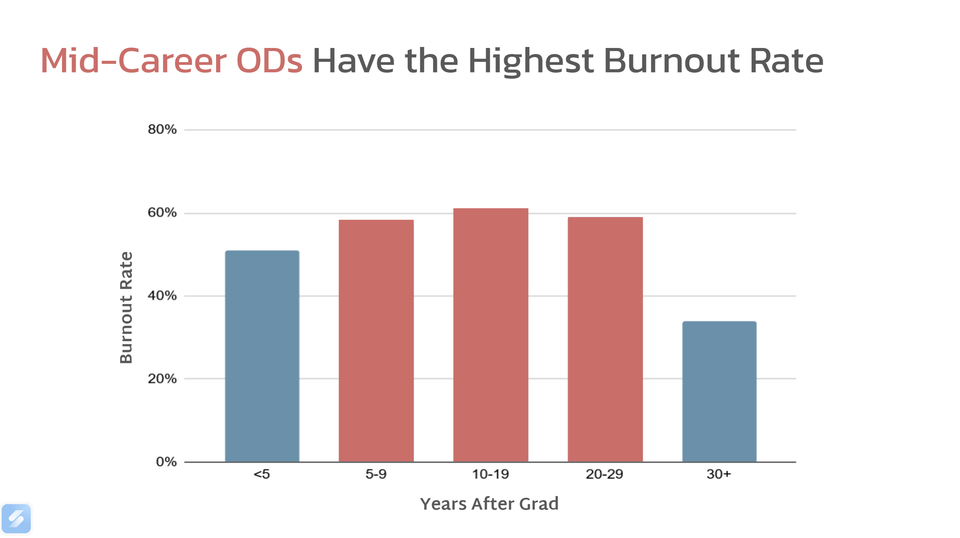
A nationwide survey of 1,500 U.S. optometrists found that mid-career ODs (5–29 years out) report the highest burnout rate—a staggering 61%.
Some are calling this a "crisis of clinical repetition."
Optometry—like many healthcare professions—is meaningful, impactful, stable…
and repetitive.
Upon further research, I learned that "monotony" is actually a common driver of burnout for optometrists.
Doctor's Professional Journey
"Fitting In"
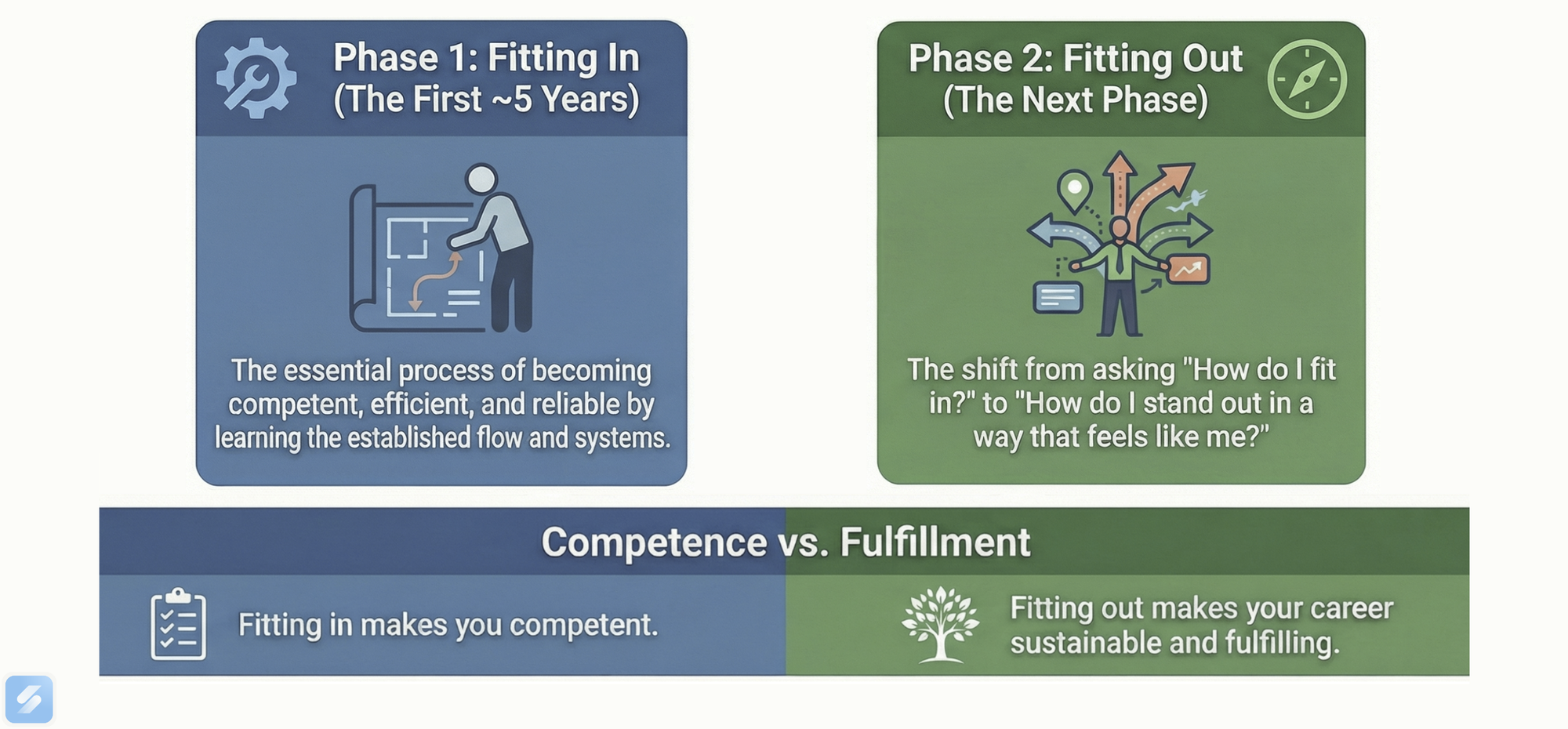
Early in your career, everything is about fitting in.
You’re putting in the reps.
Learning the flow.
Becoming competent, efficient, reliable—just like everyone else.
Eventually, you reach a point where you could almost run a full eye exam with your eyes closed.
And that’s a good thing. It’s a rite of passage that everyone goes through.
Year 5: When Monotony Creeps In
For many doctors, something else shows up around year five.
Monotony.
The exams are smooth.
The days start to blur together.
You’re good at your job—but you’re not always energized by it.
There’s less intellectual stretch. Less novelty. Less spark. This is often where burnout quietly begins.
"Fitting Out"
This is the moment where the core question changes.
Not “How do I fit in?” But “How do I fit out?”
How do I stand out—in a way that actually feels like me?
Embracing Non-Clinical Roles
One powerful way to fit out is by embracing non-clinical roles.
As doctors, our clinical expertise translates far beyond the exam room:
- Research
- Consulting
- Industry (biotech, pharma, startups)
- Speaking
- Media
- Content creation
- Education and leadership
…and much more!
Clinical work is necessarily regulated and standardized. That structure protects patients—but it doesn’t leave much room for creativity or exploration.
Non-clinical work is different.
This is where you get to make the rules:
- Tackle new intellectual problems
- Build something new
- Tap into creativity
A Final Reflection
It's not about quitting clinical work – it's about adding a non-clinical role to expand your professional identity.
Adding non-clinical roles re-energized my career, making me a better, happier clinician. It’s ironic looking back—just a few years ago, I wanted to work less and live more. Now I work more than ever, and I genuinely love it.
If you’re work days are blurring together, ask yourself:
What would “fitting out” look like for me?
Check the archive for my articles on starting non-clinical roles!






Member discussion