How to Start a Non-Clinical Role as an Optometrist

Starting a non-clinical path is shockingly simple.
There's no certification marathon. No five-year master plan.
It’s just one step:
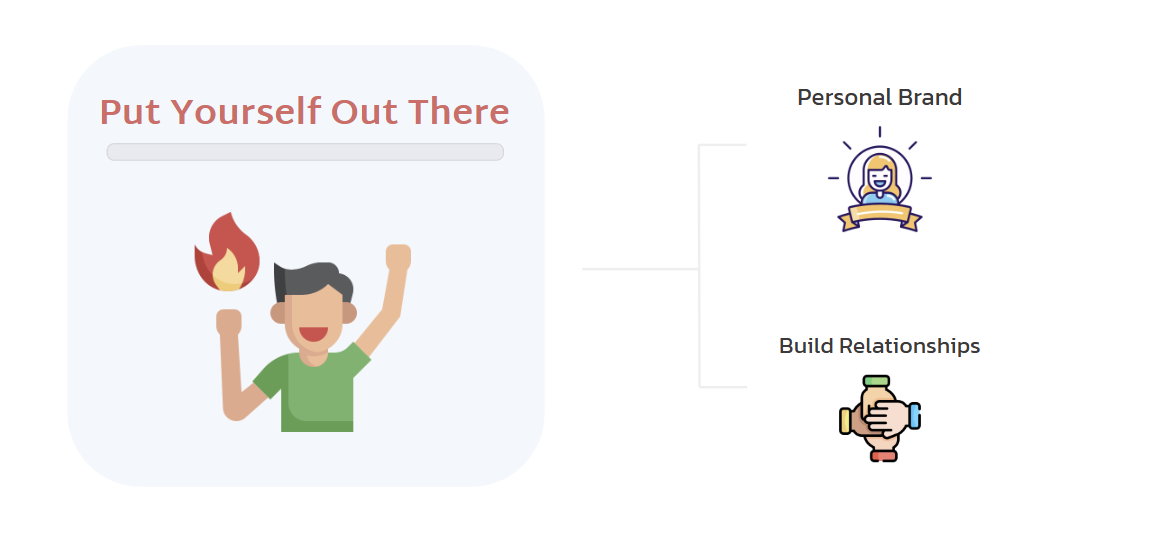
Put yourself out there.
That’s it.
That single step is the doorway to conversations, opportunities, and roles you can’t yet see. Every non-clinical path starts this way.
Two Ways to "Put Yourself Out There"
1. Build a Personal Brand
Your personal brand is your professional story.
It’s that one-of-a-kind mix of your:
- Education
- Clinical experience
- Values
- Lived experiences
Building a personal brand is really about finding your voice and your vision!
- Who are you as a professional?
- What do you want people to think of when they hear your name?
Identify Your Niche
Your niche might be:
- A clinical interest
- Practice management
- Education
- A unique perspective that blends optometry with something else entirely
Ask yourself:
What do I genuinely get excited to learn more about—and share?
You don’t need to be an expert.
Being just a few steps ahead of a beginner already provides real value. What matters far more is authenticity and honesty.
Pick ONE Platform
Pick one:
- A podcast
- A personal website
Embrace the idea of a Minimum Viable Product.
- Podcast? You can launch in a month.
- Blog? Two weeks is enough.
You don’t need to know how to code (I certainly didn’t.) The tools are easier and more powerful than ever.
Then comes the most important part:
Share Valuable Content Consistently
Share valuable content, and do it consistently.
Whether it's a unique perspective or a niche topic, share content that provides value.
Consistency is key to improving your content and building trust in your brand. Don't worry about perfecting your content, just put it out there, get feedback, and reiterate as you go!
You also don't need to reach thousands of people. Just the right few can spark amazing conversations and collaborations, opening doors you couldn't have imagined.
2. Build Relationships
People break into many non-clinical roles through connections. It's really about who you know.
There are many ways you could network:
In-Person
- Conferences
- Industry dinners
- Connecting with peers and mentors
Virtual
- Social media engagement
- Virtual coffee chats
- Supporting others’ work
- Collaborating with like-minded colleagues
For instance, reach out to one person you admire in your area of interest and ask for a 15-minute virtual coffee. Most people are far more generous than you expect.
Networking and finding your "tribe" has never been easier.
A Special Shoutout to Industry Reps
Somewhere along the way, many of us were told that reps are “just salespeople...” But that couldn’t be further from the truth.
Many reps have been in the industry longer than you have. They hold an incredible amount of knowledge:
- Market trends
- Industry shifts
- Where opportunities are emerging
- Roles you didn’t even know existed
They’re also just people—trying to do good work and help others succeed.
Building genuine relationships has been the guiding compass in my own journey and many others who are walking a non-clinical path.
You Attract What You Share
Early on, I was surprised that my well-being blog (which has nothing to do with clinical optometry) attracted opportunities that relate to optometry.
But in hindsight, it wasn’t an accident.
I wrote about well-being—with the perspective of an optometrist. My network was mostly in eyecare. So is it really a coincidence that:
- An optical company invited me to speak on work happiness?
- An optometry association asked me to talk about well-being?
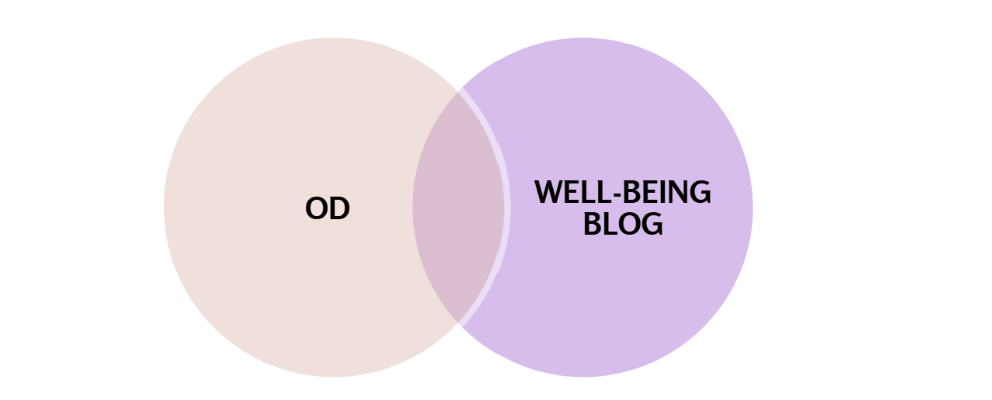
You attract what you share!
It’s Easier to Stand Out Than You Think
There are a lot of optometrists.
There are a lot of well-being bloggers.
But do you know of any optometrist who also blogs about well-being?
Standing out is easier than you think, which brings me to the next key point:
You have a one-of-a-kind mix of formal education, life experience, and personal talents.
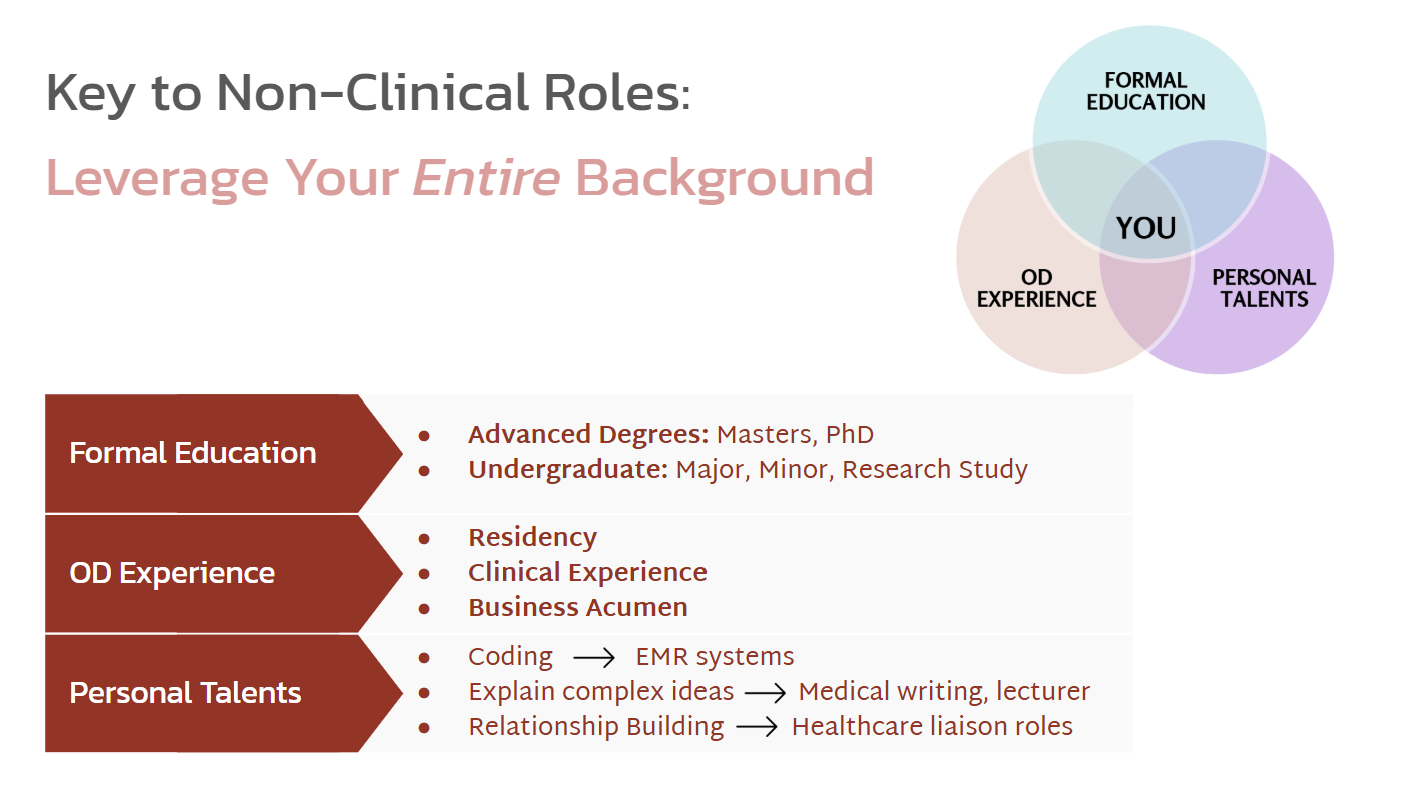
Your unique background is your "edge". Leverage it to break into non-clinical roles!
“Cut From a Different Cloth?”
I truly don’t believe that colleagues you admire with incredible non-clinical roles are cut from a different cloth.
Don't get me wrong, I respect anybody who has the courage to put themselves out publicly and become a beginner again. They deserve all the flowers for their dedication and passion.
My point is that we were all trained as optometrists. The only difference is this:
They chose to put themselves out there—even when it was uncomfortable.
You can do it too!
The Framework
My personal belief is that every clinician should pursue a portfolio career: a blend of clinical and non-clinical roles:
- Clinical role offers stability, so you can freely explore the wonderful world of non-clinical roles
- Non-clinical roles often synergize with the clinical role in unexpected ways
What To Expect On The Non-Clinical Journey
- A journey of self-discovery and growth
- A lot of “no’s”
- One “yes” that changes everything
- Finding your "tribe"
- Fun. And lots of it.
And perhaps most importantly:
You’ll become a better, happier optometrist.
Your Journey Starts Now
This week:
Begin a self-assessment. What are your passions? How do they intersect with your education and skills?
This month:
Create and share one piece of valuable content—a blog post, a LinkedIn post, a short video.
This quarter:
Attend an event or conference related to your niche.